
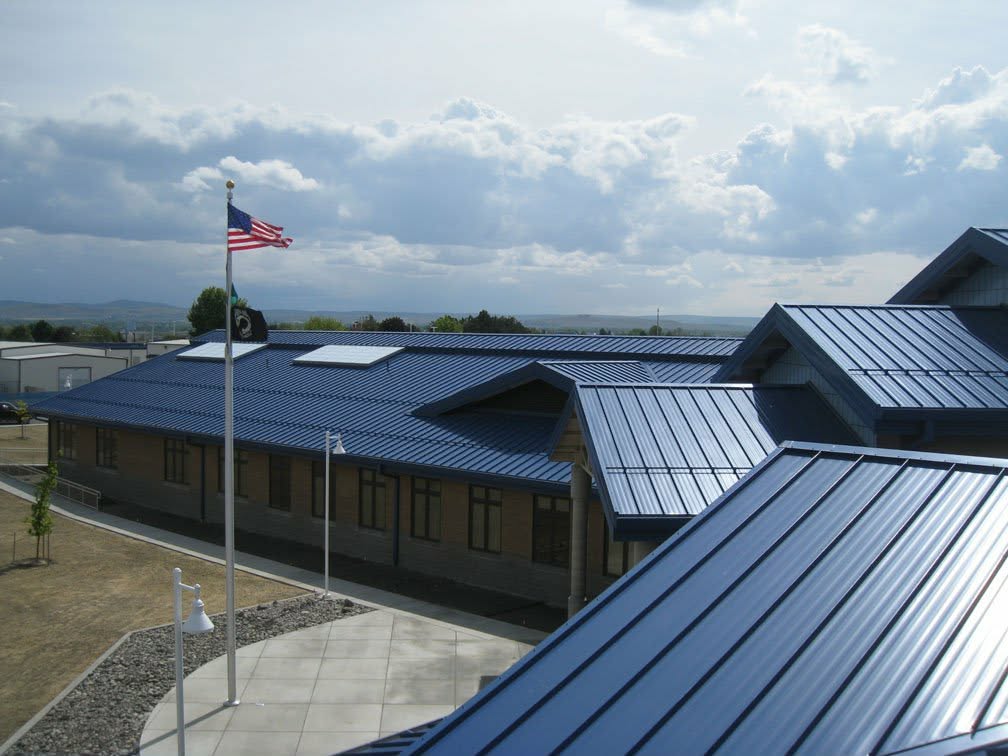
Why scheduled service extends a commercial roof's life
Commercial roofs rarely fail all at once. They fail at details, one at a time, over years. A sealant joint at a curb opens. A seam on a single ply membrane loses adhesion at one corner. A drain screen clogs and ponding begins where the deck was already slightly low. A technician servicing a rooftop unit drops a tool and punctures the membrane without mentioning it.
Each of those is a small, cheap correction on the day it happens and an expensive problem two winters later. Water that gets into the system does not stay where it entered. It travels between layers, saturates insulation, and by the time it appears on a tenant's ceiling it has usually wet a much larger area than the entry point suggests. Wet insulation does not dry out inside a roof assembly, and once it is saturated the only fix is removal and replacement of that section.
That is the entire economic case for a maintenance program. You are not buying inspections. You are buying the difference between replacing a sealant joint and replacing a saturated section of deck, insulation, and membrane during your busiest month.
Our climate makes the case sharper. Long intense summer sun degrades exposed membrane surfaces, sealants, and coatings. Valley wind stresses edge metal and perimeter attachment, which is where wind uplift concentrates. Winter brings snow load on flat and low-slope assemblies and repeated freeze-thaw that pries at every joint. A roof here goes through more stress cycles than the same assembly in a milder climate.
What a maintenance visit includes
We start at the perimeter: edge metal, coping, terminations, and fastening. Perimeter and corner zones carry the highest uplift loads, so a loose or lifted edge is both a leak risk and a wind risk.
Then the field of the roof. On single ply, that means seam condition, membrane punctures, abrasion in traffic paths, and any evidence of ponding or displaced ballast. On metal systems, it means fastener condition, panel movement, seam integrity, and rust or coating failure. We note anything that has changed since the previous visit, which is where a documented history earns its keep.
Penetrations get the closest look, because they cause most leaks. Curbs under rooftop units, pipe and conduit penetrations, exhaust fans, hatches, and skylights all get their flashing and sealant checked. On buildings with regular trade access, we look specifically for damage from other contractors working around equipment.
Drainage is next. Drains, scuppers, gutters, and downspouts get cleared and tested. Standing water is a symptom to trace, not just a nuisance, and a blocked drain in a November storm puts real weight on a deck that was not designed to hold it.
We finish with housekeeping: debris removed, loose material cleared, and repairs performed on the spot where they are small enough to handle within the visit. Larger items get scoped separately so you can plan them rather than discover them.
Documentation property managers can actually use
Every visit produces a dated report with photographs. Each photo is located on the roof, described in plain language, and categorized as repaired during the visit, needs attention soon, or monitor for change.
That record does several jobs at once. It supports manufacturer warranty requirements, which commonly hinge on documented periodic inspection and timely repair. It gives you a defensible basis for capital planning, because a roof with three years of photo history tells you where it is heading instead of leaving you guessing. It settles questions about who damaged what, which matters on buildings where multiple trades work on the roof. And it gives ownership or a board something concrete when you request budget.
For multi-building portfolios we keep the reporting consistent across properties so you can compare them, and we flag which roofs are trending toward replacement so nothing lands on you as a surprise.
Working around your operations
The building is being used. That is the constraint every commercial job actually revolves around, and it is usually handled badly.
We plan around it from the start. Retail and restaurant work gets scheduled before opening, after closing, or on closed days. Warehouse and industrial work gets phased so loading and shipping keep running. Medical and office buildings get the noisy work in blocks that are communicated in advance so tenants are not blindsided.
On the site itself, we stage materials where they do not block access, keep customer and employee entrances clear, protect landscaping and parked vehicles, and clean up daily rather than at the end of the project. Magnets go over the parking areas before we leave each day, because a nail in a customer's tire is a problem long after we are gone.
For general contractors, we sequence to your schedule and communicate directly with your superintendent. We show up when we said we would, and if something changes you hear it from us before it affects your critical path.
How a program starts
It starts with a baseline inspection at no charge. We document the current condition of the roof with photographs, identify anything urgent, and set the service interval that fits the building and its traffic.
From there the visits are scheduled, so nobody has to remember to call. You get the report after each one. Licensed and insured in Washington, registration EMPIRRS793LC.
Helpful reading: metal, single ply, and structural systems we install and service for valley businesses.
Commercial roofing services